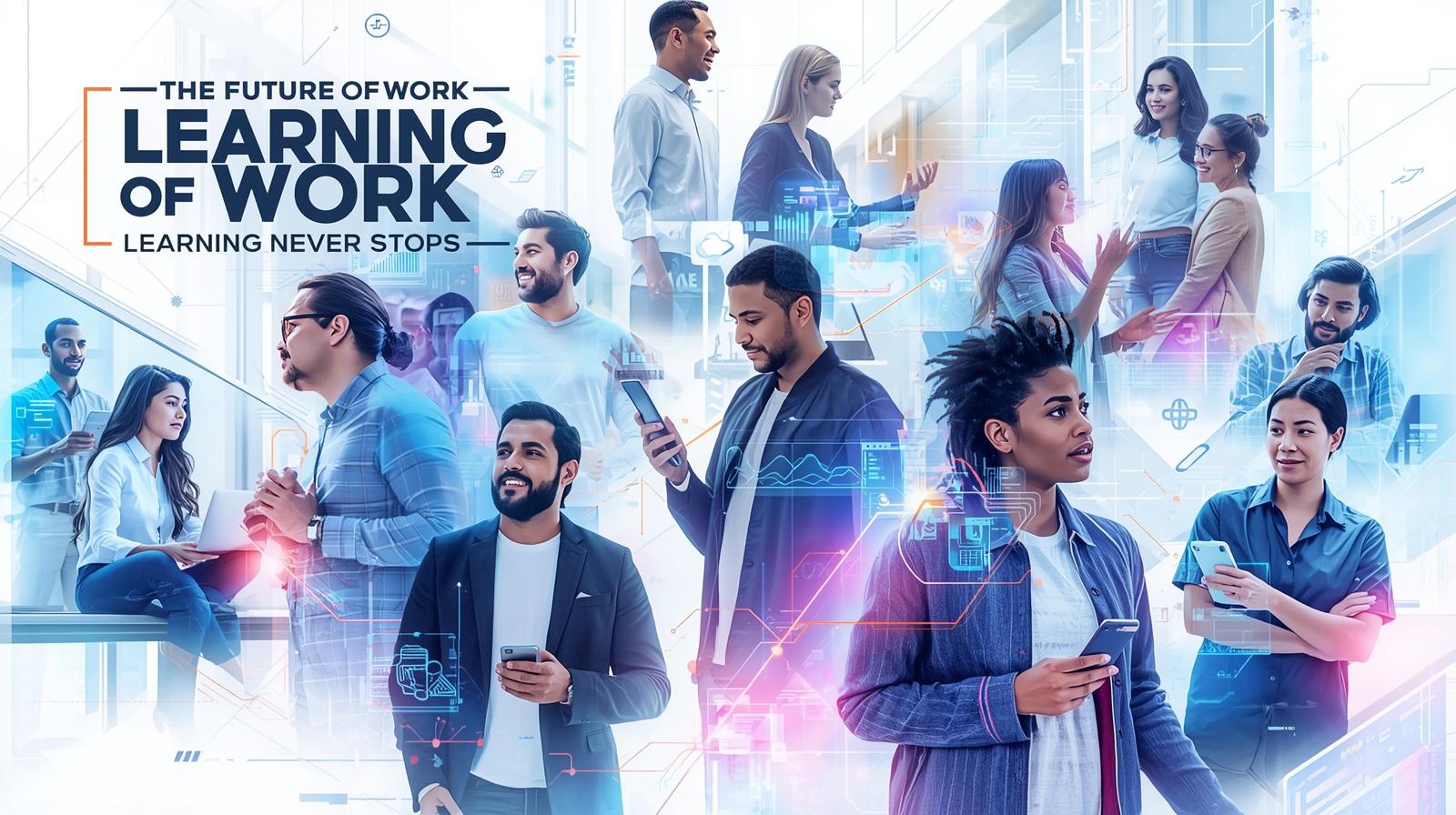
The Future of Work: Learning Never Stops

Introduction
The world of work is changing faster than ever before. New technologies, automation, and artificial intelligence are reshaping how businesses operate, what jobs exist, and which skills are in demand. In this fast-moving environment, learning cannot end with graduation—it must continue throughout life. The phrase “learning never stops” has become the golden rule of the modern workforce. At DSTA Institute, we believe that continuous learning isn’t just a professional need—it’s a mindset that keeps individuals adaptable, employable, and ready for the opportunities of tomorrow.
1. The Changing Landscape of Work
A decade ago, most people could rely on a single skill set for years. Today, that’s no longer possible. Industries are evolving at record speed, and new roles are emerging every few months. Cloud computing, AI, robotics, data analytics, and digital marketing are transforming how companies function. Jobs that didn’t exist five years ago are now among the most sought-after. This rapid evolution demands professionals who can learn, unlearn, and relearn continuously. At DSTA, our programs are designed to help learners stay ahead of this curve, preparing them not just for today’s job market—but for the industries of the future.
2. The Importance of Lifelong Learning
Learning isn’t something you complete—it’s something you live. Lifelong learning is about staying curious, upgrading your skills, and embracing change rather than fearing it. It allows professionals to remain relevant and resilient, no matter what challenges the economy or technology may bring. The best professionals in any field are those who never stop improving. At DSTA Learn, we promote lifelong learning through online courses, micro-certifications, and continuous development modules that make it easy for students and working professionals to keep their skills fresh and future-ready.
3. Technology as a Driving Force of Change
The future of work is inseparable from technology. From AI-powered decision-making to automation of repetitive tasks, technology is redefining how every industry operates. But instead of replacing humans, it’s creating new opportunities for those who can adapt. Understanding tools like cloud platforms, cybersecurity frameworks, data visualization, and digital collaboration software has become essential in almost every job. At DSTA Institute, our curriculum blends technology with practical learning, ensuring that students don’t just understand tools—they know how to use them effectively in real scenarios. The more we integrate technology into learning, the more empowered our learners become.
4. Adaptability: The New Super Skill
In the future of work, the most valuable skill isn’t coding, accounting, or design—it’s adaptability. The ability to adjust quickly to new situations, learn new systems, and respond positively to change is what defines long-term success. Every few years, new technologies make old methods obsolete. Professionals who can pivot easily remain valuable, while those who resist change risk falling behind. That’s why DSTA’s learning model emphasizes flexibility—encouraging students to explore, experiment, and evolve with industry trends. Adaptability doesn’t just prepare learners for change; it turns them into drivers of change.
5. The Rise of Hybrid Skills
The modern professional is no longer defined by a single expertise. Instead, success comes from combining multiple skills—technical, analytical, and interpersonal. A digital marketer benefits from understanding data; an engineer gains from good communication; a teacher succeeds with tech literacy. These hybrid skills make individuals versatile and irreplaceable. At DSTA Learn, our courses are carefully structured to encourage cross-domain learning. Students can explore IT, business, design, and communication modules together—allowing them to build broad capabilities that match the blended nature of modern careers.
6. The Role of Self-Learning and Micro-Learning
One of the most exciting developments in education is the rise of self-paced and micro-learning platforms. People no longer need to enroll in long, traditional courses to upgrade their skills—they can learn short, targeted lessons on specific tools or techniques. This approach fits the lifestyle of modern learners who juggle work, family, and personal growth. DSTA Learn embraces this flexibility by offering bite-sized modules and online lessons that learners can complete anytime, anywhere. These micro-learning sessions are ideal for continuous upskilling without disrupting daily responsibilities.
7. Mindset Matters: From Job Seeker to Knowledge Seeker
The future belongs to those who never stop asking questions and never stop learning. In a world where information is everywhere, curiosity becomes a competitive advantage. Learners who stay open-minded, explore new technologies, and challenge themselves regularly will always find success. DSTA Institute promotes this mindset shift—from simply seeking jobs to seeking knowledge. We remind our students that every new skill learned adds value not only to their career but also to their confidence, creativity, and self-worth. The true measure of progress is not how much you know, but how much you’re willing to keep learning.
8. How DSTA Prepares Learners for the Future
At DSTA, we see education as a journey, not a destination. Our Learning Management System (LMS) supports continuous development through updated course materials, online mock tests, and performance tracking. Students receive regular updates on new technologies and job trends to stay aligned with market needs. Whether it’s mastering MS Office, learning Python, or exploring digital marketing, every DSTA course is designed to build not just skill—but adaptability, curiosity, and lifelong learning habits. With QR-verified certifications and industry-aligned projects, learners gain confidence that extends far beyond the classroom.
Conclusion
The future of work is not about working harder—it’s about learning smarter. In a rapidly changing world, education can no longer be a one-time event. It must evolve into a continuous cycle of growth, discovery, and reinvention. Those who make learning a habit will never be left behind. At DSTA Learn, we stand by this philosophy: “Skills may get you the job, but continuous learning will keep you growing.”
When we commit to lifelong learning, every change becomes an opportunity, every challenge becomes a lesson, and every learner becomes a leader. The future doesn’t belong to the most qualified—it belongs to the most curious.