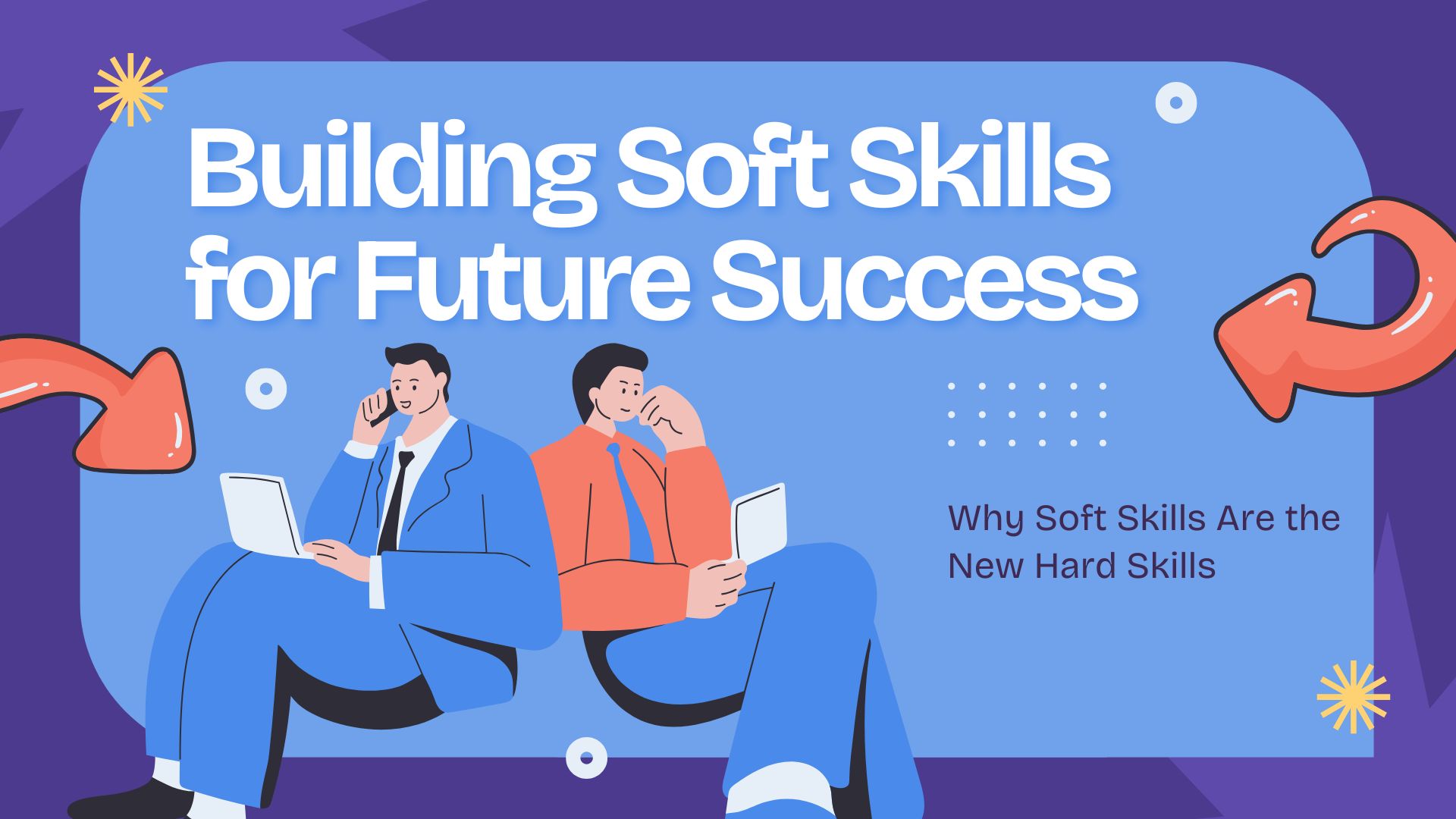
Why Soft Skills Are the New Hard Skills

Introduction
In today’s competitive world, success isn’t defined only by degrees, technical certificates, or coding abilities. It’s equally shaped by how well you communicate, lead, and adapt. While hard skills help you get a job, soft skills help you grow in it. Employers around the world are now placing greater value on personal attributes such as communication, teamwork, creativity, and problem-solving. These skills determine whether a person can work effectively, build trust, and handle challenges in a real-world environment. At DSTA Institute, we focus not just on what students know, but on who they become through a holistic approach that balances technical learning with soft-skill empowerment.
1. Understanding Soft Skills
Soft skills are the personal, emotional, and social abilities that help individuals interact effectively with others. They include communication, adaptability, leadership, teamwork, time management, conflict resolution, and emotional intelligence. Unlike hard skills, which are specific to a profession, soft skills are universal—they are valuable in every field and at every career stage. A good communicator can succeed in IT, teaching, management, or even entrepreneurship. These skills are the foundation for strong professional relationships and are often the deciding factor when two candidates have the same technical qualifications.
2. The Changing Workplace Dynamics
The modern workplace has evolved drastically. Today, most roles involve collaboration, client interaction, virtual meetings, and cross-functional teamwork. As automation takes over repetitive tasks, what remains irreplaceable are the human abilities—creativity, empathy, and critical thinking. Recruiters no longer look for only technical proficiency; they seek individuals who can handle pressure, lead teams, and communicate with confidence.
That’s why organizations describe soft skills as “power skills” or “core skills.” In short, technical ability gets you in the door, but emotional intelligence keeps you inside the room. At DSTA Learn, we train students to thrive in this new environment by combining technical training with personal development modules that prepare them for the digital yet human-centered workplace.
3. Communication: The Core of Every Profession
Whether you are a designer, engineer, or teacher, communication forms the backbone of success. Being able to express ideas clearly, listen actively, and convey messages professionally sets you apart. In team settings, effective communication reduces misunderstandings, builds trust, and increases productivity.
At DSTA, communication skills are integrated into every program—from writing emails to presenting projects. Students learn how to speak confidently, structure their thoughts, and maintain clarity in both written and spoken communication. Because in the real world, the best ideas mean nothing if they cannot be communicated well.
4. Emotional Intelligence and Teamwork
Emotional Intelligence (EI) is the ability to understand and manage your own emotions while recognizing and responding appropriately to others’. In workplaces that rely on collaboration, EI is crucial for maintaining healthy relationships and solving conflicts gracefully.
A technically skilled employee who lacks teamwork or empathy often struggles to progress. DSTA Institute’s soft skill programs emphasize emotional awareness, stress management, and interpersonal cooperation—helping students build maturity, patience, and confidence when dealing with colleagues or clients. After all, teamwork doesn’t just mean working together; it means understanding people and working with them.
5. Adaptability: Thriving in a Changing World
Technology, job roles, and business demands are changing faster than ever before. The ability to adapt quickly is now a superpower. Soft skills like flexibility, open-mindedness, and problem-solving allow professionals to adjust smoothly when faced with new tools, ideas, or work environments.
At DSTA Learn, our students are trained to be agile learners—ready to accept challenges, explore new skills, and stay relevant. Adaptability helps them remain confident even when the world changes around them. It’s not just about surviving change—it’s about turning change into opportunity.
6. Leadership and Professional Growth
Leadership isn’t about holding a position; it’s about inspiring others. Good leaders motivate teams, delegate tasks efficiently, and create positive environments where everyone performs their best. Through roleplays, case studies, and mentorship sessions, DSTA courses develop leadership qualities among learners of all ages.
We encourage students to take initiative during projects, present their ideas, and manage group assignments responsibly. When young learners experience leadership early, they grow into professionals who can handle real responsibilities without fear. Leadership soft skills also build decision-making strength and confidence in critical situations.
7. Why Soft Skills Outshine Hard Skills Over Time
Hard skills can be taught, updated, or replaced by automation—but soft skills grow with experience and remain relevant forever. A programming language may change, but the ability to collaborate with a team or handle clients with patience will always be valuable.
In fact, most career setbacks are not caused by lack of technical ability—but by poor communication, negative attitude, or inability to work well with others. Soft skills are the foundation of professionalism, helping individuals maintain balance, humility, and respect in the workplace. That’s why DSTA Institute considers soft skill development a core module in every course—ensuring that learners don’t just pass exams, but also learn to thrive as capable, confident professionals.
8. The DSTA Approach to Skill + Personality Growth
At DSTA, soft skills are not taught separately—they are blended with technical subjects to make learning holistic. Students participate in group activities, mini-presentations, and real-time feedback sessions that build communication and confidence. Our courses also include short modules on stress management, work ethics, interview preparation, and time management—essential tools for modern professionals. Every DSTA learner graduates with a unique advantage: strong technical ability powered by a confident personality.
Conclusion
In an age dominated by technology, it’s easy to forget that the most powerful skill remains human connection. Soft skills define how people work, lead, and grow together. They are the invisible strength behind every successful professional. At DSTA Learn, we believe that real education doesn’t stop at knowledge—it includes the ability to think, communicate, and collaborate.
The world doesn’t just need skilled workers; it needs confident communicators, empathetic leaders, and adaptable learners. That’s why, today, soft skills are the new hard skills.